
|
The technique of etching |
 |
The "original" of each etching is a copper plate whose lines and tones are etched in baths of strong acid through coverings of etching ground, a paint-like substance. The artist uses a simple needle tool to lightly scratch the drawn lines through the etching ground. When the needle drawing is completed, the entire plate is immersed in the acid bath for a few hours to "etch" the lines.
The plate is cleaned to prepare for aquatints. Areas of the plate are blocked out with an acid-resist and then misted with spray from an airbrush.
From a hand-mixed palette of oil-based colors, the finished plate is selectively inked, using cardboard chips to guide the colors home. The plate is then carefully wiped with tarlatan (stiff cheesecloth) and newsprint,
On the flat bed of an etching press, moist printing paper is laid over the freshly-inked plate. The high pressure of the press acts to squeeze the ink onto the paper, embossing the image in reverse.
|
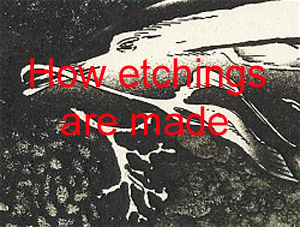 One of the great things about the etched image is the level of detail possible. It seems that in some areas of a heavily-textured etching, the closer you look the more you can see.